
Last Updated: November 19, 2026
Quick Summary
A structured gel manicure is a service that adds reinforcement and shape to your natural nails using a gel product suited to your nails. Structured gel describes how the nail is built, not one brand or formula, and it sits between a standard gel polish manicure and a full set of extensions.
- Structured describes the build: gel is layered to create a slight apex for strength.
- Builder gel is a product category that may soak off in acetone or need filing.
- BIAB stands for Builder In A Bottle and is a trademark tied to The GelBottle.
- Hard gel does not dissolve in acetone, so removal means professional filing.
- A structured manicure can add a small amount of length but is not an extension service.
Table of Contents
- What a Structured Gel Manicure Actually Is
- Structured Gel Manicure vs Builder Gel: Where the Terms Overlap
- Structured Manicure vs Hard Gel: Purpose, Removal, and Suitability
- Does a Structured Gel Manicure Add Length?
- How to Prevent Gel Nails Lifting
- Choosing the Right Service for Your Nails at Central Beauty Studio
- Frequently Asked Questions
What a Structured Gel Manicure Actually Is
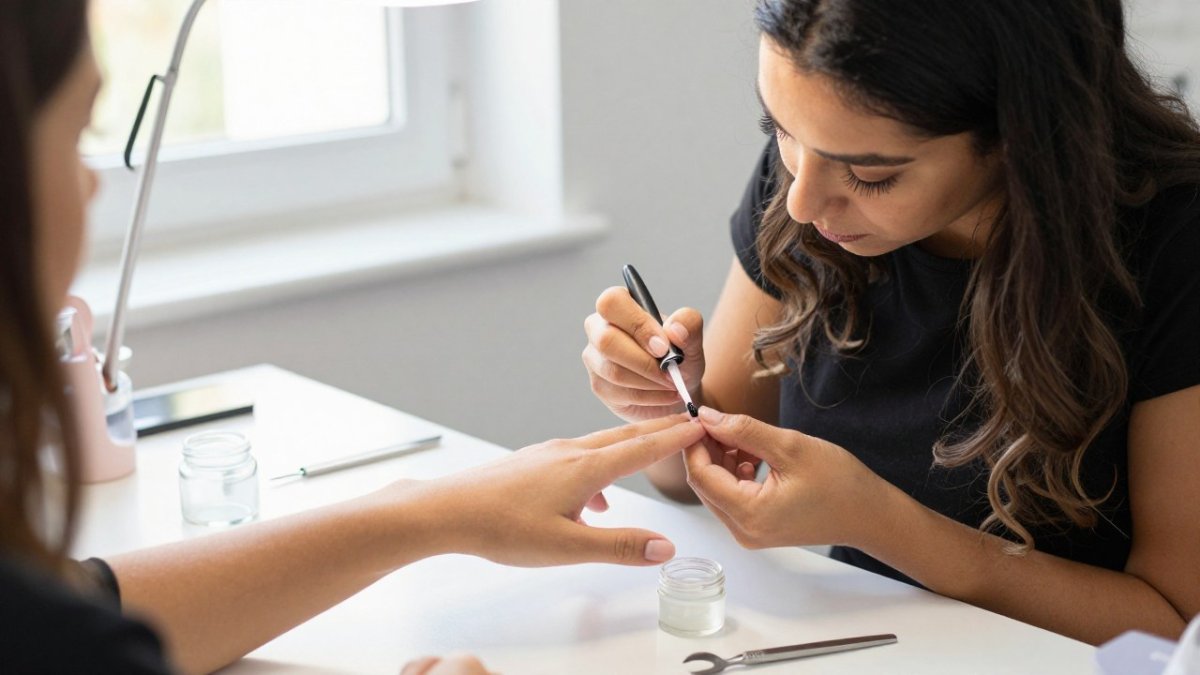
A structured gel manicure is a service that adds reinforcement and shape to your natural nails using a gel product suited to your nails. It is not one brand or one formula. "Structured" describes how the nail is built, not what is in the bottle.
I'm Juliana, and at Central Beauty Studio in Glendale, WI, structured gel is a big part of what I do. Clients often arrive confused by the names, and I get it. The labels overlap, and marketing muddies them further.
Here's the short version: a structured gel manicure gives your natural nail extra strength and a defined shape. It sits somewhere between a standard gel polish manicure and a full set of extensions. Your natural nail stays, and the gel supports it.
Why It Is Called Structured, Not a Brand
The word "structured" describes the build. A technician layers and shapes gel to create a slight apex, the thicker point near the middle of the nail that adds strength. The result is a nail with structure.
No single company owns the term. Any skilled tech can offer a structured manicure using an appropriate gel. That's why you'll see the phrase across many studios with very different products behind it.
Structured Gel Manicure vs Builder Gel: Where the Terms Overlap
A structured gel manicure is a service, while builder gel is a product category. You can probably see where this gets confusing. A structured manicure is often performed with a builder gel, but the two words mean different things.
Builder gel is any gel made to build strength and structure. Some builder gels soak off in acetone. Others need filing to remove. The formula decides, not the label.
If you're comparing products for longevity, this guide to choosing structured gel brands walks through what holds up over time.
What BIAB Means and What It Does Not
BIAB stands for Builder In A Bottle, and it's a trademark tied to The GelBottle. Other brands sell bottled builder gels, but not every builder gel is BIAB.
A bottle alone tells you nothing about removal. Some bottled builder gels soak off; others are file-off only. Always ask your tech which category the product falls into before you book.
Structured Manicure vs Hard Gel: Purpose, Removal, and Suitability
Hard gel is a file-off gel that can reinforce natural nails or build extensions. It does not dissolve in acetone, so removal means professional filing. That single fact shapes who it suits.
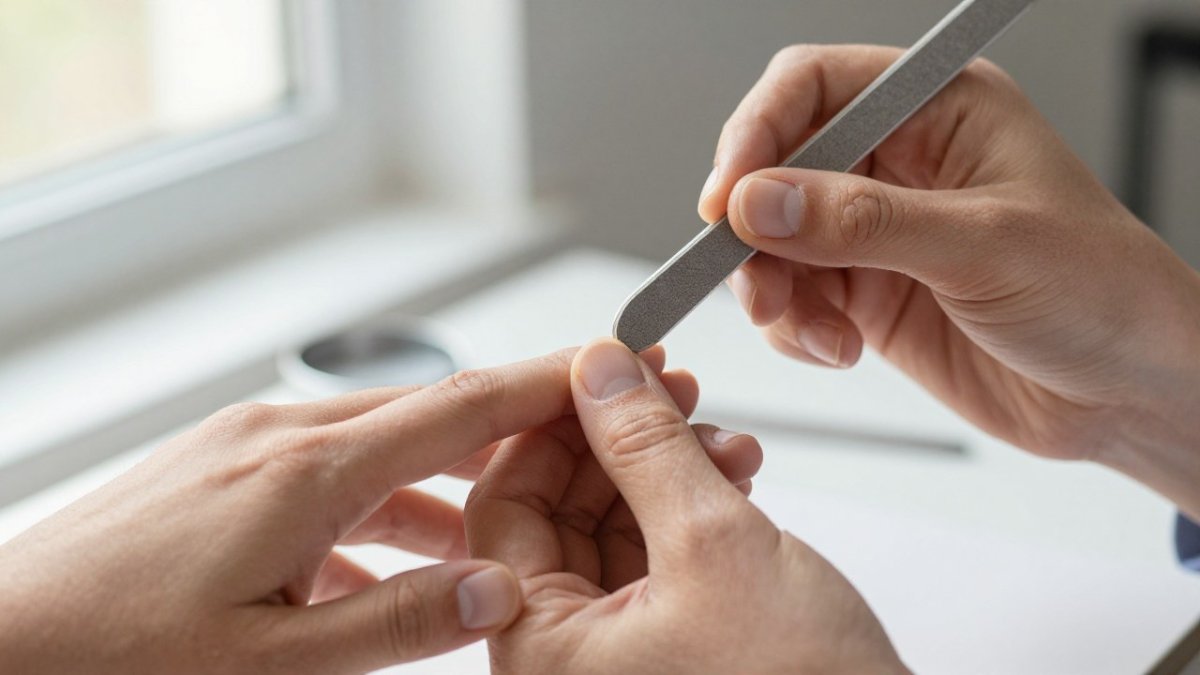
Hard gel does not automatically mean extensions. Plenty of clients wear it as reinforcement over their own nails. And structured gel does not mean thick, bulky nails. A good build looks natural.
If you're weighing hard gel, it helps to know whether professional removal is worth the cost. File-off removal takes time, and that's part of the commitment.
| Service | Purpose | Removal | Might Suit You If |
|---|---|---|---|
| Standard gel polish | Color only, no added strength | Soak-off | You want color and have strong nails |
| Structured gel manicure | Reinforcement and shape | Depends on the gel used | You want strength with a natural look |
| Builder gel | Builds structure and strength | Soak-off or file-off | You need support or slight length |
| Hard gel | Reinforcement or extensions | File-off only | You want durability and don't mind filing |
| Gel-X extensions | Added length | Soak-off | You want length beyond your natural nail |
Does a Structured Gel Manicure Add Length?
A structured gel manicure can add a small amount of length, but it is not an extension service. The gel reinforces your natural nail and can build a short tip.
If you want real length, Gel-X extensions are the better fit. If you want strength and a clean shape on your own nails, structured gel is the answer.
The honest limit: enhancements cannot heal existing nail damage.
Here is what long-term nail health actually looks like with structured gel. The nail plate grows out from the matrix, and the visible nail is already dead keratin.
Some clients arrive after a rough removal somewhere else, with nails that feel thin and sensitive. Keeping your natural nails strong between appointments matters just as much, and this guide to maintaining healthy natural nails covers how.
If you are recovering from damage, the safest approach is usually a lighter build, timely fills, and a gentle removal, not a thicker layer to compensate.
How your nails held up, how they were removed, and how they felt afterward can tell a technician more than any label on a bottle.
How to Prevent Gel Nails Lifting
Lifting is a common concern, and it often traces back to prep, application, or aftercare. Understanding why gel lifts makes it easier to prevent.
Gel bonds to the nail plate through a mechanical and chemical grip. If oils, moisture, or dead surface cells sit between the gel and the nail, the bond starts weak.
Here is what generally helps keep gel on natural nails:
- Gentle cuticle prep. Pushing back the cuticle cleanly, without overfiling the nail plate, gives the gel a surface to grip. Overfiling thins the nail and weakens the whole structure.
- Dehydrator and primer. These remove surface oils so the gel bonds properly. Skipping this step is a common cause of early lifting.
- Proper curing. Each layer needs enough time under the lamp. Rushing this step leaves the gel under-cured and prone to peeling. Lamp wattage and bulb condition matter too, a worn lamp cures unevenly.
- Keep nails dry early. Avoid long soaks and harsh cleaning for the first day while the bond settles.
- Don't pick. Picking lifts the seal and lets water underneath, which is how a small lift becomes a full lift.
- Book fills on time. Waiting too long lets the grown-out edge catch and lift.
Watch out: A heat spike, that sudden burning sensation during curing, usually means the gel layer is too thick or the nail plate is thin.
A common mistake is filing the surface too aggressively between fills. For a deeper at-home routine, this guide on preventing gel lifting goes step by step.
If lifting keeps happening in the same spot, it is worth looking at your daily habits, opening cans with your nails, long hot showers without gloves, or a job that keeps your hands wet.
Choosing the Right Service for Your Nails at Central Beauty Studio
No single system is best for everyone, and I won't pretend otherwise. I choose based on four things: your natural nail flexibility, your preferred length, your daily lifestyle, and how your nails held up last time.
Someone with flexible, thin nails may do better with a more flexible builder gel. Someone who wants length may be better served by Gel-X. A client who works with their hands all day needs a different build than someone who types at a desk.
Appointments at Central Beauty Studio are private and unhurried, with no double-booking. If you're ready, here's how to book at the studio.
The best way to know which service fits your nails is a quick conversation and a look at your natural nails.
Frequently Asked Questions
What is the difference between a gel manicure and a structured gel manicure?
A standard gel manicure uses gel polish for color and shine. A structured gel manicure adds a layer of builder gel or hard gel to reinforce the natural nail, build a slight apex, and support the shape. That extra structure helps the manicure hold up better for some clients, especially those who are hard on their hands. It is a different service with different prep and removal, not just a longer-lasting polish.
Is structured gel the same as builder gel?
Not exactly. Structured gel describes how the nail is built, while builder gel is a category of product used to create that structure. A structured manicure can be done with an appropriate bottled builder gel or a hard gel. BIAB is a trademarked name for one brand's bottled builder gel, so not every builder gel is BIAB. The formula and removal method matter more than the label on the bottle.
Does a structured gel manicure add length?
It can, but it does not have to. A structured gel manicure can reinforce your natural nails at their current length, or a hard gel can be used to sculpt a small extension. The right choice depends on your natural nail strength, your lifestyle, and how much length you want. At Central Beauty Studio, I look at your nails and your routine before deciding which approach suits you.
How often should you get a structured gel manicure filled?
Most clients need a fill or rebalance every few weeks as the nail grows out and the structure shifts. Waiting too long can lead to lifting, breakage, or extra filing at the next appointment. I recommend booking your fill before the gel starts to lift or feel loose. Keeping up with timely fills helps protect your natural nails and keeps the manicure looking its best.
