
Quick Summary
To maintain healthy natural nails, file in one direction with a fine-grit file, moisturize nail beds and cuticles daily with cuticle oil, and wear gloves for wet work and cleaning. Keep a manageable length, avoid picking or biting, and never peel off gel, damage usually happens at removal, so soak off gently and take a break if nails feel weak.
- File in one direction with a fine-grit file; sawing back and forth creates tears that turn into peeling.
- Massage a few drops of cuticle oil into the nail bed and surrounding skin each night.
- Never cut the cuticle, push it back gently after a shower and leave the rest alone.
- Soak gel off in acetone for roughly 10-15 minutes and never scrape or peel it.
- See a doctor for persistent pain, swelling, discoloration, or a nail separating from the bed.
Table of Contents
- Start With Gentle Filing and Smart Shaping
- Moisturize Nail Beds and Cuticles Daily
- Protect Your Nails During Daily Tasks
- Choose a Manageable Length and Avoid Bad Habits
- Gel Manicure Maintenance: Application, Removal, and Breaks
- Recognizing the Signs of Damaged Nails
- How Hormones, Age, and Environment Affect Nail Health
- Skip the Harsh Chemicals and Questionable Supplements
- Book Your Manicure at Central Beauty Studio
- Frequently Asked Questions
SEO Title: How to Maintain Healthy Natural Nails: A Gentle, Practical Guide
Meta Description: Simple, honest tips from a nail tech on how to maintain healthy natural nails, from gentle filing and cuticle care to gel manicure maintenance and knowing when to take a break.
Last Updated: October 29, 2026
Start With Gentle Filing and Smart Shaping
Learning how to maintain healthy natural nails starts with the basics, and filing is where most of the good or bad happens. I file in one direction with a fine-grit file instead of sawing back and forth. Back-and-forth motion creates tiny tears at the free edge, and those tears turn into peeling later.
I look at the natural nail before I pick up a file. Thin, flexible nails and thick, rigid nails need different shaping. A soft square catches on things easily if your nails are weak. A rounded shape tends to hold up better for busy hands.
Watch out: skip the coarse grit file you'd use on enhancements. On a natural nail plate it takes off more layers than you want, and those layers don't grow back in a day.
Moisturize Nail Beds and Cuticles Daily
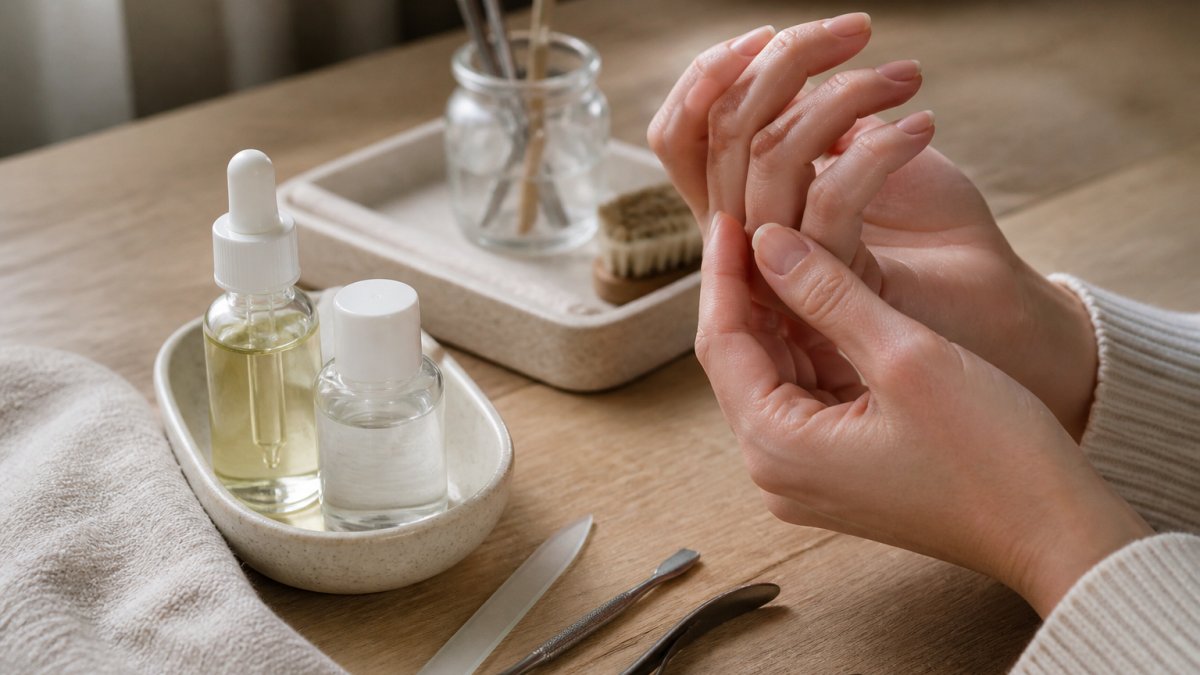
The nail plate isn't living tissue, but the skin around it is, and that skin is what protects new growth at the nail matrix. A few drops of cuticle oil massaged into the nail bed and surrounding skin each night does more for how nails look and feel than any hardener.
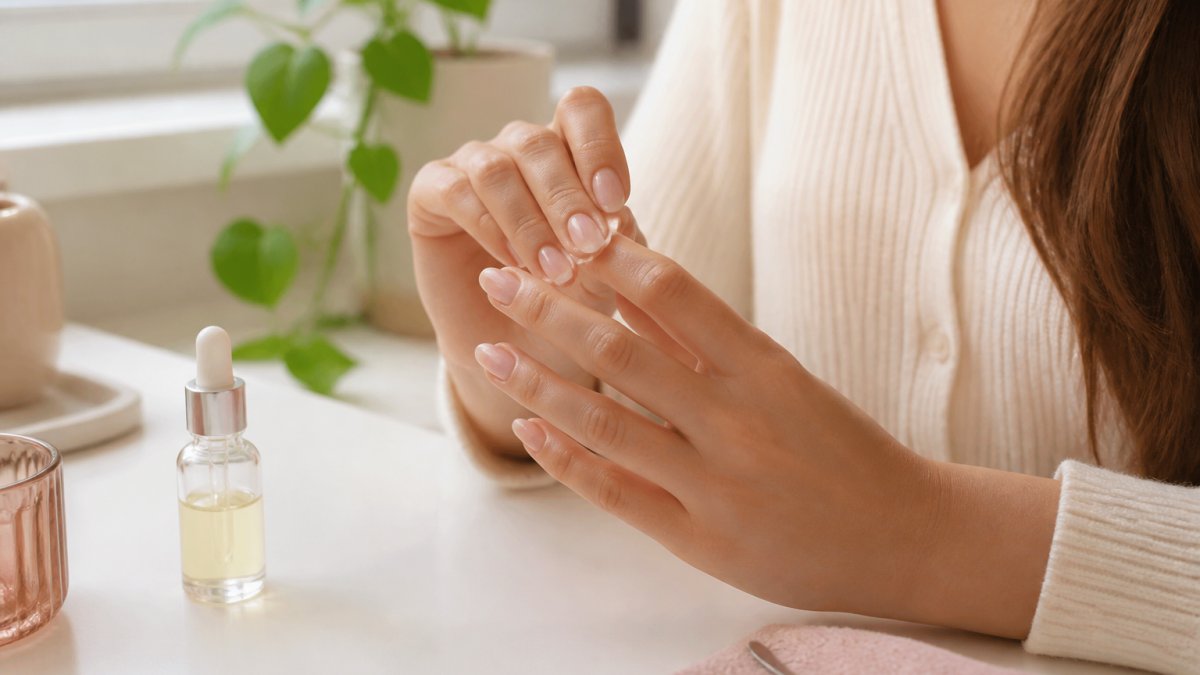
A common mistake is cutting the cuticle. That thin layer of living skin is a seal. Trimming it opens the door to irritation and infection. Push it back gently after a shower, when it's soft, and leave the rest alone. If your hands are in water all day, moisturizer alone won't keep up.
Protect Your Nails During Daily Tasks
Gloves are the least glamorous nail care tool and the most underrated. Dishes, cleaning sprays, and long soaks all pull moisture out of the nail plate, and repeated wet-then-dry cycles leave nails brittle and peeling. Keep a pair of rubber gloves under the sink and wear them for wet work.
For yard work, lifting, or anything that pries, use your knuckles or a tool, not your nails. A nail used as a screwdriver is a nail that chips.
Choose a Manageable Length and Avoid Bad Habits
Shorter nails can be easier to maintain for many people. If your nails bend, snag, or chip constantly, taking off a little length often fixes more than any product will. Picking at polish, peeling it off, and biting all remove layers from the nail plate, which is exactly what causes thinning and white spots.
The best manicure depends on your nails, your routine, and how much upkeep you actually want. Gel manicures and structured gel are options for some clients. They aren't required for healthy nails, and they don't repair a medical issue.
Gel Manicure Maintenance: Application, Removal, and Breaks
Gel manicure maintenance matters more than the initial application. Nails don't need to "breathe", the nail plate is not a living, breathing surface, but they do need proper prep, careful application, and a removal that doesn't take layers with it.
Here's the part most people get wrong: the damage usually happens at removal, not at application. When gel is peeled or pried off, it takes thin layers of the nail plate with it. That's what leaves nails feeling papery, bendy, and prone to peeling for weeks afterward.
What safe removal actually looks like
A proper soak-off isn't glamorous, and that's the point. The steps I follow:
- File off the top coat and most of the gel with a medium-grit file, stopping well before the natural nail.
- Soak in acetone, plain acetone or a remover formulated for gel, for roughly 10-15 minutes, checking every few minutes. Warmth speeds this up, which is why some techs use a warm towel or heated mitt.
- Gently push off softened gel with a wooden or silicone pusher. If it resists, soak longer. Never scrape hard.
- Skip the drill on the last layer. A hand file is safer near the natural nail.
- Moisturize right after with cuticle oil and hand cream, since acetone is drying.
If a salon wants to drill or buff the gel off dry in a few minutes, that's a sign to ask questions. Speed isn't worth thinning your nail plate.
Maintenance between appointments
- Watch for lifting at the edges and get it addressed before water gets trapped underneath, that's how staining and irritation start.
- Speak up about thinning, sensitivity, or discomfort instead of ignoring it.
- Book maintenance before grow-out causes lifting or breakage; waiting too long usually means a bigger repair.
- If your nails feel weak, take a break and use that time for cuticle oil and gentle care.
When to take a break
Breaks aren't mandatory for everyone. Others find their nails do better with a few weeks off between sets. That's a personal call based on your natural nails and how they respond. If you notice thinning, sensitivity, or a nail that bends more than it used to, that's your cue to pause and let the plate recover.
Book Your Personalized Manicure at Central Beauty Studio →
Here's the soak-off routine I follow to protect the natural nail during gel removal.
Step | What to do | Time or frequency |
|---|---|---|
1 | File off top coat and most of the gel with a medium-grit file | Stop well before the natural nail |
2 | Soak in acetone or gel remover, checking every few minutes | Roughly 10-15 minutes |
3 | Gently push off softened gel with a wooden or silicone pusher | Soak longer if it resists |
4 | Safe professional Filing removing and cleansing the nail plate | Near the natural nail |
5 | Moisturize right after with cuticle oil and hand cream | After every removal |
Recognizing the Signs of Damaged Nails
Signs of damaged nails include peeling, white spots, ridges, thinning, and a nail plate that bends easily. Most of these come from over-filing, harsh removal, or too much water and not enough moisture. They usually improve as the damaged part grows out, which is slow.
Some things aren't a nail care problem. Persistent pain, swelling, discoloration, or a nail separating from the bed deserves a professional medical evaluation. I don't diagnose, and I'd rather send you to someone who can than guess.
How Hormones, Age, and Environment Affect Nail Health
Most nail care guides stop at "moisturize and wear gloves." But nails change with what's happening inside your body and around it, and understanding that helps you stop blaming yourself when your nails suddenly behave differently.
Hormonal shifts
Pregnancy, menopause, and thyroid changes can all affect nail growth, strength, and how well polish adheres. Nail changes can be linked to life stages and to other health conditions, so if your nails change alongside other symptoms, it's worth mentioning to your doctor. I don't diagnose any of this, but if your nails change alongside other symptoms, it's worth mentioning to your doctor.
Age
Nails thin and grow more slowly with age, and ridges become more common. That doesn't mean you can't wear gel, it means the prep and removal need to be gentler, and the length may need to come down. A shorter, rounded shape is often easier to maintain as nails change with age.
Environment beyond winter
Winter dryness gets all the attention, but it's not the only culprit:
- Low humidity indoors (heating and air conditioning) pulls moisture from the nail plate year-round.
- Frequent hand sanitizer and harsh soaps strip oils along with germs.
- UV exposure from sun or tanning beds can affect the nail plate and surrounding skin over time.
- Occupational water exposure, nurses, bartenders, hairstylists, cooks, is one of the most common causes of peeling and splitting I see. If your hands are wet for hours a day, gloves and a heavier hand cream matter more than any polish choice.
- Cleaning chemicals without gloves break down the nail plate's natural oils.
If your nails suddenly look different, new ridges, separation, discoloration, or a change in shape, it's worth mentioning to your doctor, especially alongside other symptoms. I'd rather you get a real answer than guess.
Skip the Harsh Chemicals and Questionable Supplements
Some gels still need acetone for safe removal. Biotin and vitamin B7 supplements get a lot of attention, but I don't suggest them without a real, identified need, and it's worth talking to your doctor first.
Book Your Manicure at Central Beauty Studio
Healthy nails are built at home between appointments, and the right professional service supports that instead of working against it. If you're looking for gel manicures in Glendale, WI, I'd love to help you find what suits your nails. You can read notes from the studio for more at-home care tips, or book a manicure or structured gel appointment online.
Frequently Asked Questions
How can I make my natural nails stronger?
Stronger natural nails come from consistent care rather than one quick fix. File gently in one direction, keep nails moisturized with cuticle oil, wear gloves for cleaning, and avoid using nails as tools. If you wear gel, proper application and removal matter just as much as the polish itself. At Central Beauty Studio, I focus on gentle prep and structured gel when appropriate, but the right approach depends on your natural nails and lifestyle.
Do nails need to breathe between manicures?
Nails don't actually breathe in the way people think. That said, taking a break from gel can be helpful if you notice thinning, discomfort, or damage. If something feels off with your nails, it's worth talking about and adjusting your routine.
What are the signs of damaged nails I should watch for?
Signs of damaged nails include peeling, white spots, thinning, ridges, and nails that bend too easily. Discomfort during or after a manicure is another clue. If you see persistent pain, swelling, discoloration, or nail separation, that's a reason to see a doctor rather than trying to fix it with polish. I can help you spot early warning signs during your appointment and adjust your routine, but I don't diagnose medical conditions.
Is gelatin or biotin good for fingernails?
Some people ask about gelatin or biotin for nail strength. Biotin is a B vitamin, and while some people take it for nails, there's no guarantee it helps unless you have an identified deficiency. I don't recommend supplements without a real need, and I always suggest talking to your doctor first. Focus on moisturizing, gentle filing, and protecting your hands. Those habits do more for healthy natural nails than most supplements.
How does lifestyle affect natural nail health?
Lifestyle plays a big role. Frequent handwashing, cleaning without gloves, and using nails as tools all take a toll. Hormonal changes, age, and dry environments matter too. The right length and service depends on your daily routine. A structured gel manicure isn't necessary for everyone. The goal is nails that work for your life.
SEO Title: How to Maintain Healthy Natural Nails: A Gentle, Practical Guide
Meta Description: Honest, practical tips from a nail tech on how to maintain healthy natural nails, including filing, cuticle care, gel maintenance, and when to see a doctor.
Button: Book Your Manicure Link: https://centralbeautynails.com
