
Last Updated: November 14, 2026
Quick Summary
Professional gel removal is worth it when you have hard gel, structured gel, extensions, or sensitive nails, since trained filing and controlled soaking lower the risk of scraping and thinning. For simple soak-off gel polish on healthy nails, careful at-home gel removal can be reasonable.
- A proper soak-off starts with a gentle file to break the top seal, then acetone foil wraps for a timed soak.
- Hard gel and structured gel resist acetone, so removal is mostly careful filing that leaves the natural nail intact.
- Peeling gel off takes layers of nail with it, which can show up weeks later as peeling or breakage.
- Keep nails bare and short on day one, then massage cuticle oil in daily.
- Wait until nails feel firm and no longer sensitive, often one to two weeks, before your next service.
Table of Contents
- What Professional Gel Removal Actually Involves
- Gel Nail Removal at Home vs Salon: The Real Difference
- Healthy Natural Nail Care After Gel Removal
- Frequently Asked Questions
What Professional Gel Removal Actually Involves
Whether professional gel removal is worth it comes down to what your natural nails need.
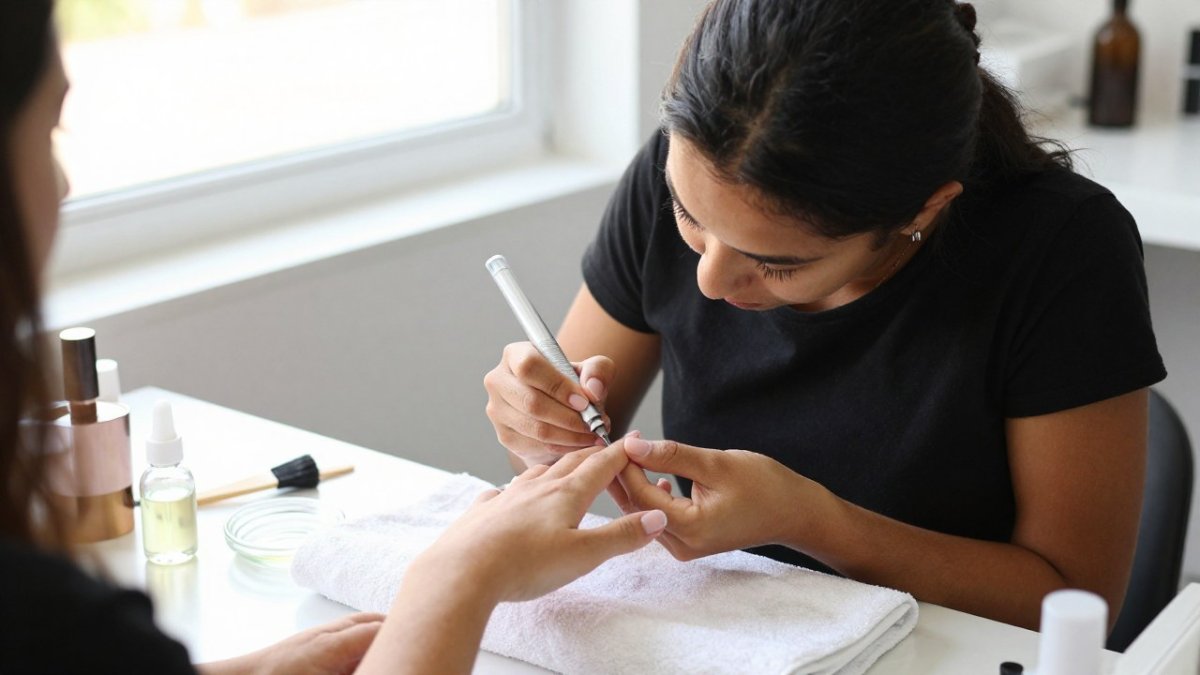
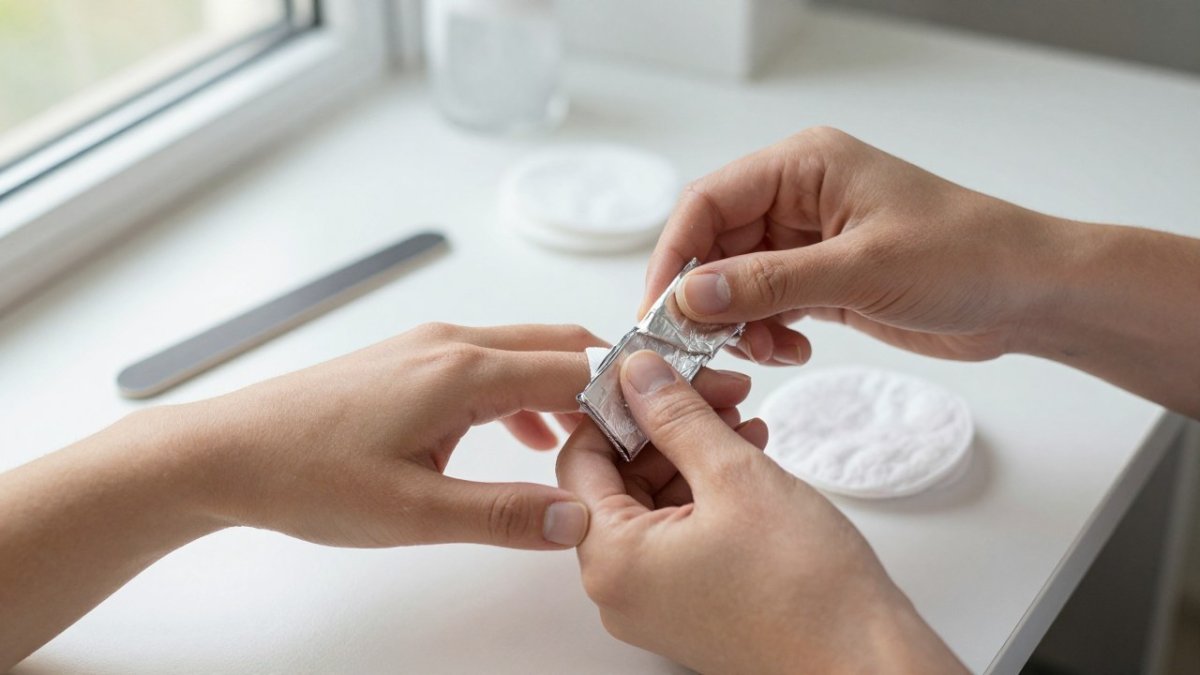
A proper soak-off starts with a gentle file to break the top seal, then foil wraps with cotton pads and acetone sit on each nail for a timed soak. Hard gel or structured gel may need more filing first, since those products don't soak off the same way.
If your nails already feel thin or sore from a past removal, this guide on how to repair damaged nails after acrylics covers the recovery side.
Gel Nail Removal at Home vs Salon: The Real Difference
Salon removal can be gentler on the nail plate; at-home removal saves a trip but carries more risk. The catch is that "gel" covers several products, and the right method depends on which one is on your nails.
Match the method to the product
- Soak-off gel polish softens in acetone, so a gentle file to break the top seal followed by foil wraps usually does the job.
- Hard gel and structured gel resist acetone, so removal is mostly careful filing that leaves the natural nail intact.
- Gel-X extensions may soak off the tip, but the attachment layer often needs filing first, and the process takes longer than a polish removal.
If you are not sure what is on your nails, ask before you start soaking. Soaking a hard gel that will not budge wastes time and tempts you to pick at it.
A simple decision guide
Choose salon removal when:
- You have hard gel, structured gel, or extensions.
- Your gel is lifting, chipping, or peeling at the edges.
- Your nails feel sore, thin, or sensitive.
- You cannot see the sidewalls and edges well enough to work safely.
At-home removal can be reasonable when:
- You have simple soak-off gel polish with no lifting.
- Your nails are healthy and not sensitive.
- You have acetone, cotton pads, foil, a gentle file, and a wooden stick on hand.
| Factor | Salon Removal | At-Home Removal |
|---|---|---|
| Best for | Hard gel, structured gel, extensions, lifting or sensitive nails | Simple soak-off gel polish on healthy nails |
| Technique | Trained filing and controlled soaking | Easy to rush, pick, or scrape |
| Risk | Lower when the technician works gently | Higher risk of scraping and thinning |
A careful appointment looks unhurried, with gentle filing, timed soaking, and checking the nail between steps. Watch out: if removal stings, burns, or the technician starts prying at gel that has not softened, speak up and ask them to stop. Pain is not a normal part of removal.
Peeling gel off takes layers of nail with it, and that thinning often shows up weeks later as peeling, breakage, or sensitivity.
If you are deciding where to go, this guide on finding a private nail technician near Glendale walks through what to look for, and you can book a gel removal appointment online when you are ready.
Healthy Natural Nail Care After Gel Removal
Your nails need moisture and a break from filing after removal. Dryness and sensitivity are common for a few days, and the nail surface can look rough or feel thin right after the gel comes off. That is normal and usually settles as the nail grows and rehydrates.
A simple post-removal routine
- Day one: keep nails bare and short. Skip buffing, filing, and polish so the surface can settle.
- Daily: massage cuticle oil into the nail and surrounding skin, then follow with a gentle hand cream.
- Through the week: wear gloves for dishes and cleaning to limit water and chemical exposure.
- Before your next service: wait until nails feel firm and no longer sensitive, often one to two weeks, depending on your nails and how much filing they went through.
What to expect, realistically
Some dryness and peeling at the edges is normal after removal. Breakage is more likely if the nail was thinned during removal or if you go back to a long enhancement too soon. If a nail feels painful, looks discolored, or lifts from the nail bed, pause and check with a healthcare provider rather than book another service.
Professional removal can reduce avoidable damage, but it does not guarantee damage-free nails. Technique, product type, and how often you wear gel all factor in. Matching the next service to your nail condition and lifestyle, rather than repeating the same thing every visit, tends to make the biggest difference.
For a deeper routine, this guide on maintaining healthy natural nails goes further. When your nails are ready for fresh color, you can book online at centralbeautynails.com when the time feels right.
Gel removal isn't one-size-fits-all, and your nails deserve a plan built around them. At Central Beauty Studio, I work one-on-one in a private studio, focus on gentle prep and natural nail health, and take the time to check how your nails are responding at every step. If you're in Glendale, WI and want a calm, unhurried appointment, book online at centralbeautynails.com.
Frequently Asked Questions
Do gel nails need to be removed professionally?
Not always, but professional gel removal is the safer choice for structured gel, hard gel, and Gel-X. A technician can tell the difference between soak-off gel and hard gel, then choose soaking or gentle filing accordingly. At home, it is easy to mistake one for the other and end up scraping or picking. If your nails are thin, sensitive, or already lifting, having them removed in a salon reduces the risk of nail plate damage.
What is the healthiest way to get gel nails off?
The gentlest approach is to let a professional soak off the product with pure acetone and foil wraps, then lightly buff away what remains without scraping the nail plate. Never peel, pick, or pry off gel polish, even when it is lifting, because that takes layers of your natural nail with it. After removal, apply cuticle oil daily and keep nails short until they feel strong again.
Can I peel or pick off gel polish if it is lifting?
Please don't. Picking at lifting gel feels satisfying, but it pulls up thin layers of the nail plate and leaves nails dry, sensitive, and prone to peeling. If a nail is lifting, wrap it in foil with acetone for about 15 minutes or book a removal appointment. At Central Beauty Studio, I check for lifting during your appointment and remove only what needs to come off, so healthy product stays put.
